
Neural Networks: Brains in Silicon
Neural Networks
Neural networks are a fascinating branch of artificial intelligence inspired by the structure of the human brain.
This article explores how neural architectures learn, adapt, and perform complex decision-making tasks.
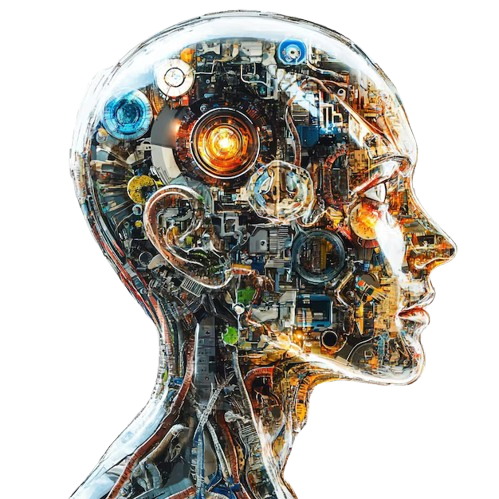
1. The Origins of Neural Networks
While neural networks feel like a cutting-edge invention, their conceptual foundations stretch decades into the past. Early pioneers such as Warren McCulloch and Walter Pitts laid the groundwork in the 1940s by proposing simplified mathematical models of neurons. Their idea was audacious: if biological neurons could be modeled as logical units, then perhaps machines could someday mimic certain cognitive functions.
The journey continued with the perceptron in 1957, introduced by Frank Rosenblatt. It was an early attempt to create a learning machine a device that could adjust itself based on mistakes. Although perceptrons had major limitations, most notably their inability to learn non-linear patterns, they planted the seed for what we now call deep learning.
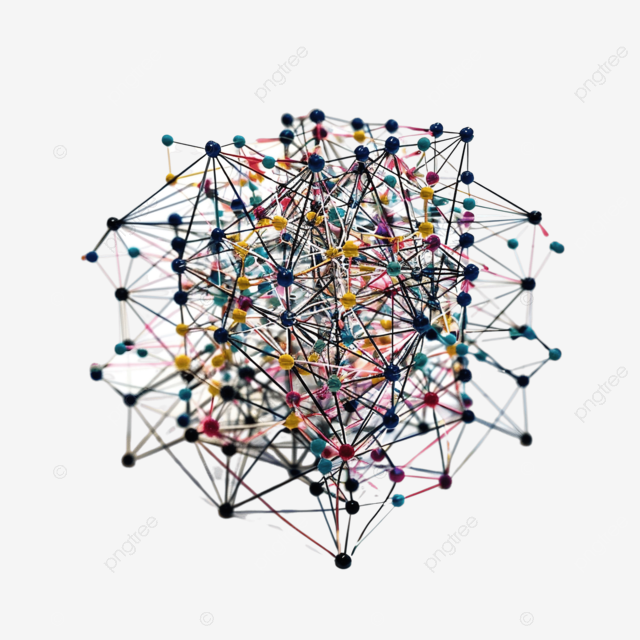
2. Understanding the Building Blocks
At the core of every neural network is the neuron, a computational unit that receives inputs, multiplies them by weights, sums them, and applies an activation function. Activation functions such as ReLU, sigmoid, or tanh decide how strongly each neuron fires.
Layers and Architecture
Neural networks are arranged in layers:
A deeper network one containing many hidden layers can extract increasingly abstract features. For example, an image-recognition network may detect edges in one layer, shapes in the next, and entire objects in deeper layers.
3. How Neural Networks Learn
Learning occurs through a process called backpropagation, where the network compares its output to the truth and adjusts internal weights based on the error. This iterative method gradually reduces mistakes, enabling the model to “understand” the data.
Gradient Descent
To minimize error, networks use optimization algorithms such as:
Each optimizer offers a unique way of adjusting weights toward better accuracy. Gradient descent, in particular, is a cornerstone of neural learning—it’s the mathematical equivalent of walking downhill until you reach the lowest valley.
The Role of Data
Data quality is just as critical as network architecture. Biases, noise, or insufficient samples can lead to unreliable or unpredictable behavior. Neural networks don’t truly understand—they detect patterns. If the patterns are flawed, the decisions will be too.
4. Modern Neural Network Architectures
Over the years, researchers built specialized architectures designed for specific tasks.
Convolutional Neural Networks (CNNs)
CNNs excel at vision tasks through specialized filters that detect edges, textures, shapes, and objects. From self-driving cars to facial recognition, CNNs power an enormous portion of modern computer vision systems.
Recurrent Neural Networks (RNNs)
RNNs introduced a new capability to machine learning: memory. By carrying information across time steps, RNNs became the backbone of early language models, speech recognition engines, and sequence prediction systems.
Transformers: The Modern Powerhouse
Transformers changed everything. Their self-attention mechanism allows models to consider relationships across entire sequences simultaneously. This architecture powers today’s large language models, redefining what AI can achieve.
5. Challenges Neural Networks Face
Despite their capabilities, neural networks struggle with several fundamental issues:
Neural networks are often criticized as “black boxes.” Although techniques like attention visualization and saliency maps help, it remains difficult to pinpoint exactly how models reach specific conclusions.
Small perturbations in input data can cause dramatic changes in predictions. This is especially concerning in fields like healthcare and finance, where decisions must be trustworthy.
AI models inherit the biases of their training data. When used in real-world systems like hiring or security, unchecked bias can lead to unfair outcomes.
6. Neural Networks in Everyday Life
Although neural networks feel abstract, they influence countless daily interactions:
Neural networks form the invisible infrastructure of much of modern digital life.
7. The Rise of Generative AI
One of the most transformative evolutions of neural networks is their newfound ability to generate: text, images, audio, code, entire virtual worlds.
Generative Adversarial Networks (GANs) introduced synthetic image creation, enabling deepfake technologies and art generation. Diffusion models improved this further, forming the backbone of modern creative tools.
Transformer-based models can now write essays, answer questions, debug code, summarize documents, generate educational content, and assist in research at unprecedented scale.
8. Human-AI Collaboration
As AI systems advance, the conversation increasingly shifts from competition to collaboration. Neural networks augment human abilities:
Neural networks aren’t replacing human intelligence—they are extending it.
9. The Future: Beyond Deep Learning
Researchers are exploring models that go beyond today’s neural networks:
The future of neural networks may be more brain-like, more efficient, and more capable than anything we use today.

10. Conclusion
Neural networks have come a long way—from simple mathematical abstractions to the engines powering generative AI. They detect patterns we cannot see, scale far beyond human capacity, and operate at lightning speed. While they bring immense challenges, they also unlock extraordinary possibilities.
As we continue refining them, neural networks will not merely imitate human intelligence—they will redefine what intelligence itself can become.